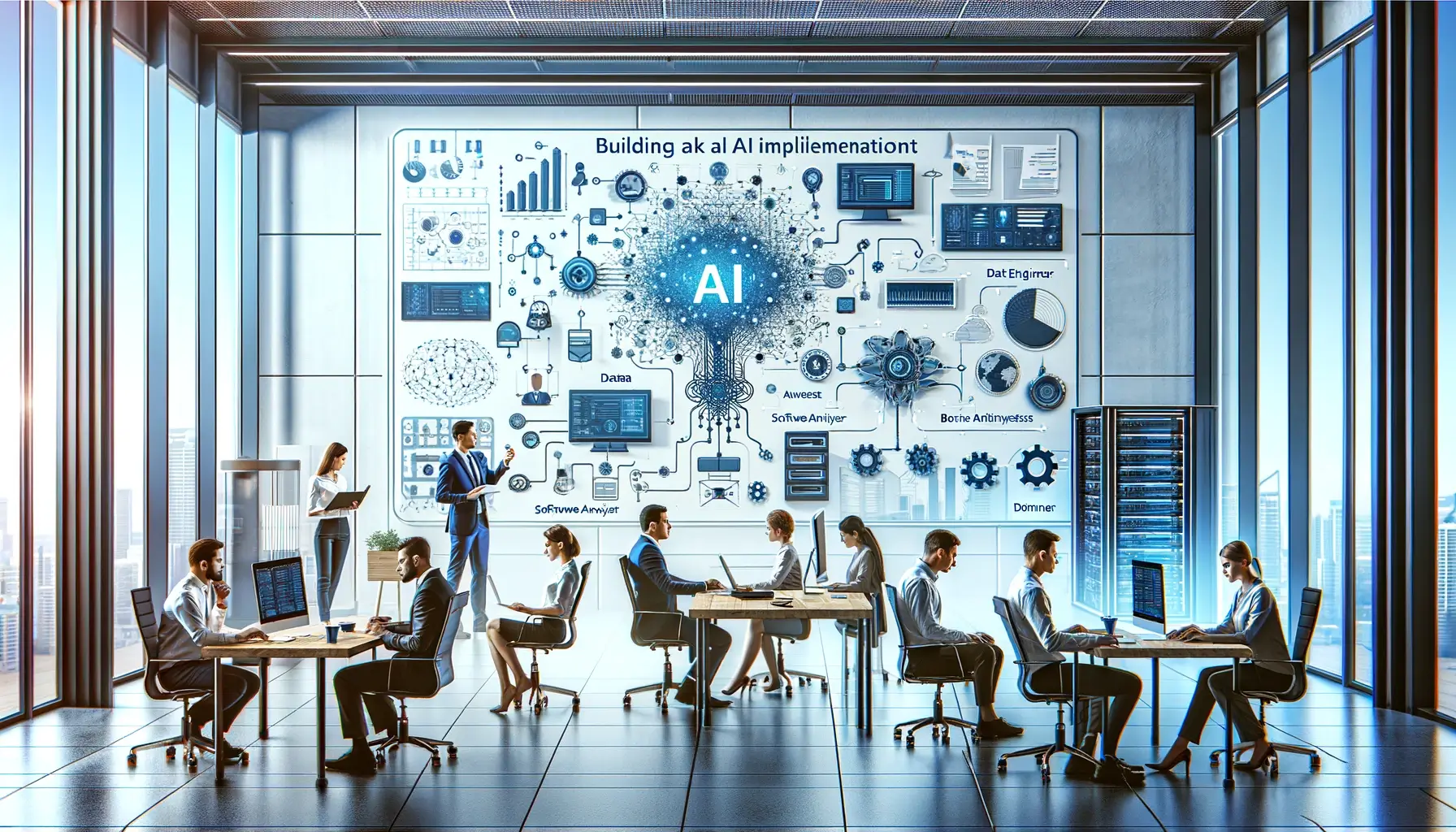
At DistinctionAI, we believe in the transformative power of Artificial Intelligence (AI) to revolutionize businesses across industries. However, successfully implementing AI requires more than just cutting-edge technology. Building a skilled and well-coordinated team is paramount to ensure a smooth and successful AI integration journey. This article explores the crucial roles and competencies needed to assemble a high-performing AI team.
The Enticing Allure of AI
AI has captured the imagination of the business world, promising to automate tasks, streamline processes, generate deeper insights, and unlock new avenues for innovation. From optimizing supply chains to personalizing customer experiences, the potential applications of AI are vast. However, this potential can only be realized through the expertise of a well-rounded AI team.
Building the Dream Team: Key Roles and Competencies
While the specific roles within an AI team may vary depending on the size and nature of your organization, there are several core functions that are essential for success. Here’s a breakdown of the key players and the skillsets they bring to the table:
AI Strategist/Project Manager
The architect of your AI journey, the AI Strategist has a deep understanding of both business needs and AI capabilities. They possess excellent planning and communication skills, leading the charge in defining AI goals, identifying suitable use cases, and developing a clear roadmap for implementation. This role requires a strong grasp of project management methodologies, risk assessment, and the ability to translate complex technical concepts for stakeholders.
Ideal candidate: Look for a seasoned project manager with a blend of leadership qualities and a firm grasp of AI concepts. They should excel at communication, bridging the gap between technical and business stakeholders to ensure strategic alignment.
Data Scientist/Engineer
The data scientists and engineers are the data wranglers and algorithm builders of the team. They possess expertise in data analysis, machine learning, and statistical modeling. Their core competencies include data acquisition, cleaning, preparation, and feature engineering. They design, develop, and train AI models, ensuring they are optimized for accuracy and efficiency. A keen understanding of programming languages like Python and R, coupled with strong analytical and problem-solving skills, are hallmarks of a successful data scientist/engineer.
Ideal candidate: Prioritize candidates with strong programming skills (Python, R, SQL) and expertise in machine learning algorithms, statistical modeling, and data analysis. Their ability to solve problems, think critically, and navigate complex data is crucial for successful AI model development.
Data Analyst/Business Analyst
The data analyst bridges the gap between technical data and actionable business insights. They work closely with data scientists to translate technical jargon into business-oriented metrics. Their analytical skills enable them to interpret AI outputs and identify patterns that inform strategic decision-making. Business analysts, on the other hand, focus on understanding the specific needs and challenges faced by different business units. They collaborate with the AI team to ensure AI solutions are tailored to address these challenges and deliver tangible business value.
Ideal candidate: Seek individuals with exceptional analytical skills and a data-driven approach. Business acumen and the ability to translate AI outputs into clear business context are essential. Proficiency in data visualization tools and excellent communication skills allow them to effectively communicate data insights to stakeholders.
Software Engineer
The software engineers are responsible for building and deploying the AI models into production environments. They possess expertise in software development frameworks, cloud computing platforms, and API integrations. Their ability to translate machine learning models into robust and scalable software applications is crucial. A strong understanding of software development lifecycle (SDLC) methodologies and best practices is essential.
Ideal candidate: Target engineers with strong programming expertise (tailored to your project needs) and experience with cloud platforms. A solid understanding of SDLC methodologies ensures efficient translation of AI models into production-ready software. Their code should prioritize scalability and maintainability for long-term success.
Domain Expert
Industry knowledge is invaluable when implementing AI. Domain experts bring a deep understanding of the specific challenges and opportunities within a particular business domain. They collaborate with the AI team to ensure AI solutions are grounded in real-world business context and address the unique needs of the organization.
Ideal candidate: Industry knowledge is paramount. Find candidates with deep expertise in your specific domain who can translate business challenges into actionable AI use cases. Collaboration skills and a willingness to stay updated on the evolving AI landscape are valuable assets for a successful team.
Beyond Technical Skills: The Power of Soft Skills
While technical expertise is undeniably important, a successful AI team thrives on a strong foundation of soft skills as well. Here are some key soft skills that foster collaboration and drive success:
Communication
Effective communication is paramount across all team members. The ability to clearly articulate complex technical concepts to non-technical stakeholders and collaborate effectively amongst team members with diverse backgrounds is crucial.
Problem-Solving
AI projects are rarely straightforward. The ability to think critically, troubleshoot challenges, and adapt to changing circumstances is essential for navigating the inevitable roadblocks that arise during implementation.
Creativity
AI solutions often require innovative thinking to bridge the gap between business needs and technical capabilities. A team that embraces creative problem-solving can uncover new and effective ways to leverage AI for transformative results.
Teamwork
Building and implementing AI solutions is a collaborative effort. The ability to work effectively as part of a team, share knowledge, and leverage each other’s strengths is vital for success.
Building Your Dream Team: Considerations and Strategies
Now that we’ve explored the key roles and competencies, here are some practical considerations for building your AI team. These considerations and strategies allow you to target top talent, build a well-rounded team with the right blend of skills, optimize project management and communication, prepare for the evolving AI landscape, and ultimately maximize the ROI of your AI project by assembling a team that delivers effective solutions and drives real business value.
Internal vs. External Expertise
Should you leverage existing talent within your organization or seek external expertise? Evaluate the skillsets of your current workforce and identify any skill gaps that need to be addressed. Upskilling or reskilling existing employees can be a cost-effective approach. However, for specialized roles or niche skillsets, hiring external talent may be necessary.
Building vs. Buying
Do you need to build your AI team from scratch, or can you leverage pre-built AI solutions or partner with an AI development agency like DistinctionAI? Consider the complexity of your project, the budget at hand, and the internal resources available. For simpler projects, pre-built solutions or partnerships can offer a faster and more cost-effective approach. For more complex projects, building a dedicated team might be the best course of action. DistinctionAI can offer expert consultation to help you determine the best approach for your specific needs.
Fostering a Culture of Continuous Learning
The AI landscape is constantly evolving. To stay ahead of the curve, your AI team needs to embrace continuous learning and development. Encourage participation in training programs, conferences, and workshops to keep their skillsets current. DistinctionAI can offer ongoing support and training to ensure your team remains proficient in the latest AI technologies.
The Road to Success: Planning for a Smooth Implementation
Planning for a smooth AI implementation is critical. Clearly defined objectives ensure your team focuses on delivering real value. Choosing suitable use cases maximizes impact, and careful data preparation avoids roadblocks. Developing, testing, and deploying a robust model is essential, while ongoing monitoring allows for continuous improvement and ensures your AI solution delivers on its full potential.
Once your team is assembled, here are some key steps to ensure a smooth and successful AI implementation:
- Clearly Define Objectives: Start by clearly defining your AI goals. What specific challenges do you want to address? What outcomes do you hope to achieve? Having clear and measurable objectives ensures your AI team is focused on delivering real business value.
- Identify Suitable Use Cases: Not all business problems are well-suited for AI solutions. Carefully evaluate different business processes to identify areas where AI can have the most significant impact. Focus on use cases with large datasets, repetitive tasks, or the potential for generating valuable insights.
- Gather and Prepare Data: AI thrives on data. Ensure you have access to high-quality, relevant data to train your AI models. This may involve data collection, cleaning, and preparation to ensure its accuracy and usefulness for model training.
- Develop and Test Your AI Model: The data scientists and engineers will take center stage as they develop and train your AI model. This involves choosing the appropriate machine learning algorithms, training the model, and rigorously testing its performance to ensure accuracy and reliability.
- Deployment and Monitoring: Once the AI model is ready, it needs to be deployed into production. This may involve integrating it with existing systems and monitoring its performance to track its effectiveness and identify opportunities for further optimization.
Partnering for Success: How DistinctionAI Can Help
At DistinctionAI, we understand the complexities of building a skilled AI team and successfully implementing AI solutions. We offer a comprehensive suite of services designed to empower your business on its AI journey:
AI Consultation
Imagine having a team of seasoned AI experts by your side, guiding you through the exciting yet complex world of AI. Our AI Consultation service is your gateway to unlocking the potential of AI within your organization. We’ll begin by working closely with you to understand your specific business goals and challenges. Through in-depth discussions and analysis, we’ll identify areas where AI can have the most significant impact. Leveraging our expertise, we’ll then recommend tailored AI solutions that perfectly align with your unique needs. This personalized approach ensures you’re not just implementing the latest AI trends but strategically adopting AI to address your specific pain points and drive real business value.
Custom AI Development
Our team of AI specialists doesn’t just speak the language of AI—they build groundbreaking solutions that transform businesses. The Custom AI Development service takes your AI vision and turns it into reality. From scratch, our team can design and build custom machine learning models that address your specific challenges. This might involve tasks like automating data analysis, predicting customer behavior, or optimizing logistics processes. We don’t stop at model development—our expertise extends to integrating your AI seamlessly with your existing systems and infrastructure. This ensures a smooth and efficient transition, allowing you to leverage the power of AI without disrupting your current operations.
Data Analytics
Data is the lifeblood of AI, and DistinctionAI is here to help you unlock its full potential. Our Data Analytics service goes beyond simply collecting data. We have a team of experts skilled in advanced analytics techniques. They’ll meticulously extract valuable insights from your data, uncovering hidden patterns and trends that can inform your AI strategy and decision-making processes. Imagine using data to predict equipment failures before they occur or personalize marketing campaigns for maximum impact. That’s the power of data analytics, and DistinctionAI puts this power at your fingertips.
Automation Solutions
Let’s face it, repetitive tasks can bog down your team and hinder productivity. Our Automation Solutions service leverages AI to streamline processes and free up your team to focus on what matters most. We’ll identify repetitive tasks that are ripe for automation and develop AI-powered solutions to handle them effectively. This might involve automating data entry, generating reports, or scheduling appointments. By automating these tasks, your team can dedicate their time and skills to higher-level strategic initiatives, driving innovation and growth for your business.
Conclusion: Building a Successful AI Team – A Recipe for Transformation
Building a skilled AI team is the cornerstone of a successful AI implementation. By identifying the key roles, fostering a collaborative environment, and embracing continuous learning, you can create a team that unlocks the transformative potential of AI. DistinctionAI stands ready to be your partner in this exciting journey. Contact us today to discuss your AI needs and learn how we can help you achieve your business goals.
Remember, AI is a powerful tool with the potential to revolutionize your business. With the right team in place, you can harness the power of AI to gain a competitive edge, unlock new opportunities, and drive your business towards success.