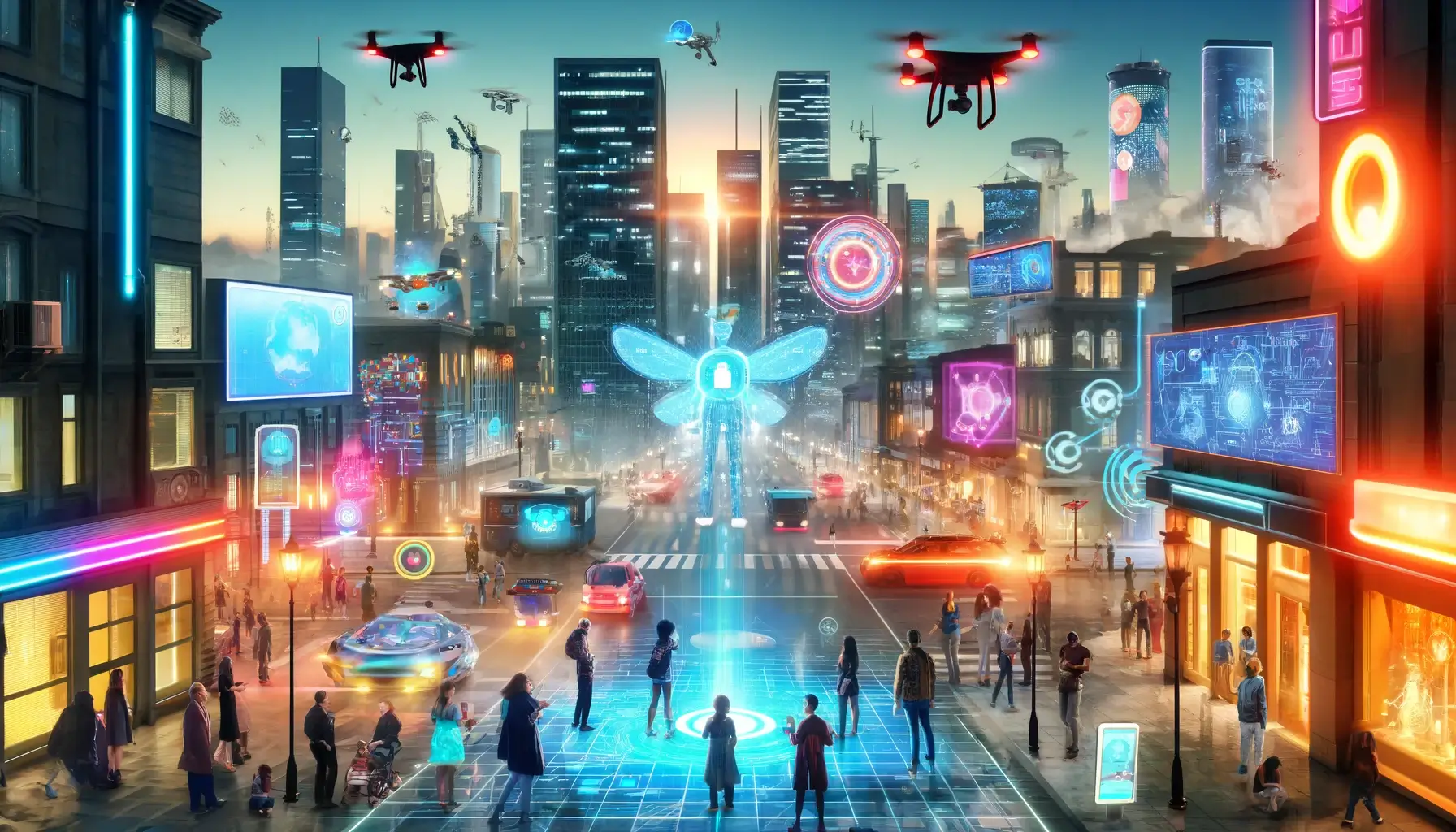
Artificial intelligence (AI) has rapidly transformed our world, disrupting industries, redefining human-computer interaction, and driving innovation at an unprecedented pace. From facial recognition technology on your smartphone to AI-powered chatbots handling customer service inquiries, AI is seamlessly woven into the fabric of our daily lives. But what does the future hold for AI? At DistinctionAI, we’re constantly looking ahead, leveraging our expertise to craft cutting-edge AI solutions for our clients. This article explores some of the most exciting trends shaping the future of AI technology and its applications.
1. The Democratization of AI
One of the most significant trends in AI development is its increasing democratization. Traditionally, AI development was the domain of large corporations with access to vast resources and technical expertise. However, the landscape is rapidly shifting. Open-source AI frameworks, cloud-based computing power, and user-friendly development tools are making AI more accessible than ever before. This democratization empowers businesses of all sizes, from established enterprises to budding startups, to harness the power of AI and develop custom solutions tailored to their specific needs.
The democratization of AI creates a level playing field where smaller businesses can leverage AI tools and cloud-based resources to compete with larger corporations. To prepare, businesses should identify areas where AI can automate tasks or improve decision-making, develop a clear AI strategy, and upskill their workforce to work alongside AI.
2. The Rise of Explainable AI (XAI)
As AI systems become increasingly complex, the need for explainability becomes paramount. Explainable AI (XAI) focuses on making the decision-making processes of AI models transparent and understandable. This is crucial for building trust in AI, particularly in applications with high stakes, such as healthcare or finance. By understanding how AI systems arrive at their conclusions, humans can ensure they are aligned with ethical principles, unbiased, and functioning as intended. XAI research is exploring various techniques, such as feature attribution methods, that highlight the specific data points influencing an AI model’s decision. As XAI advancements continue, AI will become more trustworthy and widely adopted across diverse industries.
The rise of Explainable AI (XAI) is crucial for building trust in AI, especially in sensitive sectors. Businesses can prioritize XAI by choosing models with explainability features and by clearly communicating the reasoning behind AI decisions. Additionally, developing an ethical framework ensures responsible AI development and deployment.
3. AI for Social Good
AI has the potential to be a powerful force for positive change in the world. From tackling climate change and environmental challenges to addressing global health issues and educational disparities, AI applications are being developed to address some of humanity’s most pressing concerns. For instance, AI can analyze vast datasets on climate patterns to predict extreme weather events and develop sustainable energy solutions. In healthcare, AI-powered diagnostics can revolutionize disease detection and treatment, while AI-driven personalized learning platforms can adapt to individual student needs, improving educational outcomes.
AI for social good presents an opportunity for businesses to leverage their AI expertise to address global challenges. Businesses can explore initiatives where AI can be applied to sustainability, healthcare, or education, and consider the societal impact of their AI products to ensure they are aligned with ethical principles.
4. The Evolving Human-AI Relationship
As AI technology continues to mature, the nature of human-AI collaboration will evolve. We’re moving beyond a paradigm where AI simply replaces human jobs. Instead, the future lies in fostering a synergistic relationship where humans and AI work together to achieve optimal results. AI can automate repetitive tasks, freeing up human time for higher-level cognitive functions like creativity, problem-solving, and strategic decision-making. This collaborative approach unlocks new possibilities for innovation and productivity across various sectors.
To prepare, businesses should reskill and upskill their workforce in areas like data analysis, critical thinking, and creative problem-solving to work effectively alongside AI. Focusing on human-centered design ensures AI solutions complement human capabilities, not replace them entirely.
5. The Intersection of AI and Other Emerging Technologies
The future of AI is not a solitary path. AI will increasingly intersect with other emerging technologies like blockchain, the Internet of Things (IoT), and quantum computing, creating a powerful synergy that will redefine technological capabilities. For instance, AI combined with blockchain can revolutionize secure data management and facilitate seamless transactions in a decentralized environment. Similarly, AI-powered IoT devices can create a hyper-connected world, collecting and analyzing real-time data to optimize processes and personalize user experiences.
By following these trends and exploring potential synergies between AI and other technologies, businesses can stay ahead of the curve and position themselves for success in the AI-powered future.
Additional Trends
Here are some other emerging trends worth considering:
- Focus on Embodied AI: This involves integrating AI with robots and other physical systems, creating intelligent machines that can interact with the physical world. This has vast applications in fields like manufacturing, logistics, and healthcare.
- Advancements in Natural Language Processing (NLP): NLP is becoming increasingly sophisticated, enabling AI systems to understand and respond to human language with greater nuance and accuracy.
- The Rise of Generative AI: Generative AI models can create entirely new content, from realistic images and videos to novel musical pieces and even creative text formats. This technology has the potential to disrupt various industries, from media and entertainment to product design and marketing.
- The Importance of AI Security: As AI becomes more ubiquitous, concerns around security and potential misuse will undoubtedly grow. Robust security measures and ethical frameworks will be crucial for ensuring responsible development and deployment of AI.
By staying informed about these trends and actively exploring their potential applications, businesses can position themselves for success in the exciting future powered by AI.
The Road Ahead
The future of AI is brimming with exciting possibilities. As AI technology continues to evolve at an exponential rate, the applications across industries are truly limitless. At DistinctionAI, we’re passionate about staying ahead of the curve, continuously refining our expertise to deliver the most advanced AI solutions to our clients.
Here’s how DistinctionAI can help your business navigate the future of AI:
- AI Consultation: Our in-depth consultation services can help you identify the most impactful ways to integrate AI into your business strategy, ensuring a clear roadmap for success.
- Custom AI Development: Our team of AI specialists can design and develop bespoke AI solutions tailored to your specific needs and challenges.
- Data Analytics: We leverage advanced data analytics to unlock valuable insights from your data, empowering you to make informed decisions driven by AI-powered intelligence.
- Automation Solutions: We craft intelligent automation solutions that streamline your processes, boost efficiency, and free up your human workforce to focus on strategic initiatives.
By partnering with DistinctionAI, you gain access to a team of passionate AI specialists dedicated to helping you harness the transformative power of AI for your business. We believe in the responsible development and application of AI and are committed to working alongside you to achieve your goals in an ethical and sustainable manner.